
The Evidence Gap: Why Strategy Decks Fail Under Scrutiny
Strategy decks collapse when claims aren’t traceable. Learn the common evidence failures—and a practical, auditable workflow for defensible decisions.
1) The “evidence gap” hiding inside most strategy narratives

Strategy decks often look solid until the first hard question: “Where did that come from?” When the underlying inputs are fragmented, biased, or stale, the narrative becomes brittle. Teams unintentionally mix yesterday’s market-research, a few confident anecdotes, and a spreadsheet of assumptions into something that feels coherent—but can’t withstand scrutiny.
This is the evidence gap: a widening distance between what the deck claims and what the organization can prove. In decision-making, that gap shows up as re-litigated meetings, slow approvals, and risk-management by gut feel. In competitive-intelligence work, it shows up as overreacting to headlines or missing quiet signals like hiring patterns and roadmap changes.
The cost isn’t just embarrassment in an exec review. It’s missed windows, mispriced bets, and decisions that can’t be defended later to boards, auditors, or partners. The fix isn’t “more slides.” It’s a system where every claim is tied to auditable evidence, with assumptions and confidence stated clearly.
2) Failure modes: cherry-picked anecdotes, recycled TAMs, and unchecked assumptions

Most decks fail the same way—quietly, predictably, and under time pressure. One common pattern is cherry-picked anecdotes: a compelling customer quote or competitor rumor becomes the headline, while conflicting signals are ignored. Another is recycled TAMs: market size numbers copied from old memos or vendor PDFs without checking definitions, years, or methods. In strategy work, these shortcuts feel efficient; in market-research, they’re landmines.
A third failure mode is unchecked assumptions masquerading as facts—growth rates, conversion funnels, willingness-to-pay, “competitor X will never do Y.” In competitive-intelligence, teams may treat a single press release as product reality, missing the operational evidence in changelogs, docs, job postings, patents, or pricing pages.
These aren’t just data issues; they’re decision-making issues. If you can’t trace a claim to a source, you can’t assess bias, timeliness, or relevance. That undermines risk-management: you don’t know which bets are robust, and which are stories that collapse when conditions change.
3) A practical path to defensible strategy: auditable claims, consistent frameworks, continuous monitoring
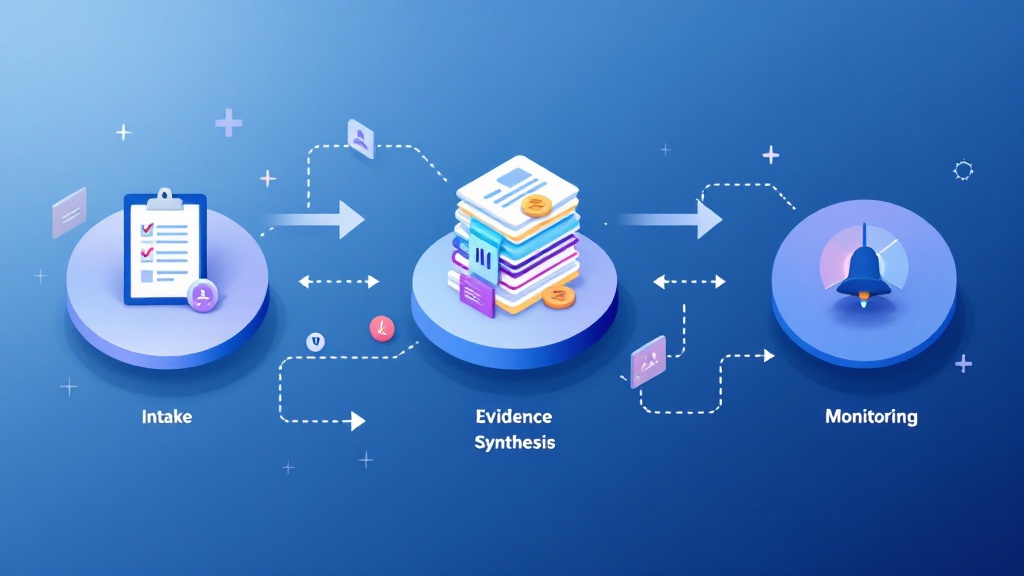
Defensible decisions come from a simple discipline: separate evidence from interpretation—then connect them explicitly. Start with a structured intake: the decision, scope, timeline, and what “good” looks like. Then build the brief using consistent frameworks (e.g., TAM/SAM/SOM, segmentation, competitive landscapes, pricing logic) where each claim carries a citation, a note on assumptions, and a confidence rating. This turns market-research into decision-intelligence: clearer options, tradeoffs, and recommendations.
Next, make traceability effortless. Centralize curated sources, preserve links and excerpts, and keep an audit trail from raw inputs to synthesized insights. LLM-assisted synthesis is powerful here—but only when grounded in evidence and transparent about uncertainty.
Finally, prevent staleness with ongoing monitoring. Competitive-intelligence should be a living system: alerts for funding, hiring, product changes, and regulatory or category shifts. Tools like DecisionBrief Foundry operationalize this workflow—briefs that export cleanly to memo/slide formats, plus monitoring that refreshes the evidence over time. The result is faster decision-making and stronger risk-management: not just persuasive decks, but claims that hold up when the scrutiny arrives.